
Every month, we will be sharing all the exciting things occurring within the FMA. This is the best place to find out what is happening in the FMA community, and a great opportunity for us to share relevant information and connect with our FMA members.
We hope you enjoy!
The FMSB has published important new and updated guidance for family mediators.
New & Updated Documents:
✨ Mediation Screening and Assessment: Guidance and Toolkit
🤖 Guidance on the Use of AI in Family Mediation
🔄 Updated MIAM Guidance
🧭 Updated PPC Guidance
If you deliver training, supervise mediators, or shape practice, these are essential reading.
🔗 Access all documents here:
https://www.familymediationcouncil.org.uk/mediator-area/standards-codes-guidance/
We are expanding our Affiliate Membership and would value your support.
Affiliate Membership connects professionals across disciplines — strengthening collaboration and improving outcomes for families navigating change.
How You Can Help:
• Recommend colleagues or organisations
• Share our LinkedIn posts
• Start conversations with aligned professionals
Your network and insight are invaluable in helping us build a strong, collaborative community.
If someone would benefit from joining, we would love to hear from them.
Thank you for helping us grow.
The Separated Parenting Programme Directory is a valuable tool for signposting clients to additional support.
It brings together trusted parenting programmes designed to:
• Improve communication
• Support children’s wellbeing
• Build co-parenting confidence
➡️ https://separatedparentingprogrammedirectory.org/
A useful complement to mediation practice.
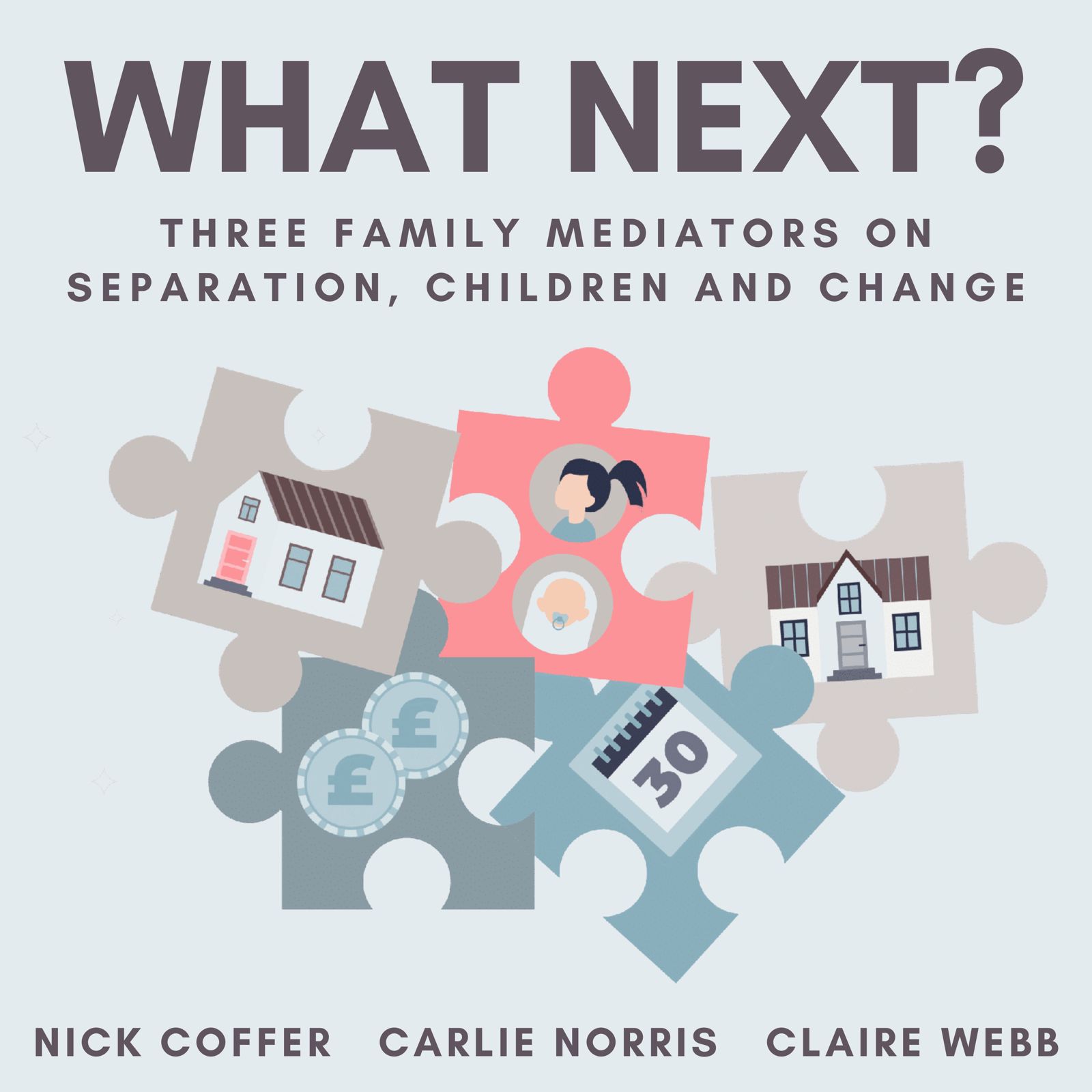
FMA members Nick Coffer, Carlie Norris and Claire Webb have launched a new podcast exploring what happens when relationships end.
What Next? offers calm, practical conversations for:
• Individuals navigating separation
• Professionals supporting families
The first two episodes are now live.
🎧 Listen here:
Apple: https://podcasts.apple.com/gb/podcast/what-next/id1871450250
Spotify: https://open.spotify.com/show/7bhG4QjesiS0r1RPftE3Cy?si=b370beda53a14494
Online mediation using video conferencing technology is becoming increasingly common in family law, particularly since the covid-19 pandemic. We are conducting a research study to better understand how and when online family mediation is used in England and Wales, how suitability is assessed, the benefits and challenges involved, and whether current training and guidance could be improved. If you are a family mediator in England and Wales, we would greatly value your input in our research project. The first phase of the study is an online survey, which should take no longer than 20 minutes to complete. Your input will help shape future practice and support improvements in training and guidance. You can find out more about the research study and complete the survey using this link:
https://sunduni.eu.qualtrics.com/jfe/form/SV_a9wIF7KMM0nU43s
We would like to thank you in advance for taking the time and effort to complete the survey. If you have any questions about the survey or research study, please do not hesitate to contact the lead research, Dr Amy Sixsmith at amy.sixsmith@sunderland.ac.uk
Discover how the Family Court enforced a pre-nuptial agreement while penalising serious litigation misconduct in Lo v Loh-Gronager [2025] EWFC 483.
The parties married in 2019 after entering into a pre-nuptial agreement which disapplied sharing and compensation principles, providing the husband with a formula-based entitlement that increased over time. By the point of separation, he was entitled to £6.4 million under the agreement.
However, during proceedings the husband was found to have taken substantial sums from joint accounts without authorisation, fabricated key documentary evidence (including forged emails), and engaged in conduct designed to harass and destabilise the wife — including publishing personal photographs online and instructing a private investigator to intimidate her.
The court held that significant sums taken by the husband were not his separate property but advances against his entitlement under the agreement. Applying s25(2)(g) MCA 1973, the judge found his conduct crossed the threshold of seriousness and reduced his award further to reflect litigation misconduct. His final award was reduced to £2,369,385.
Read the full headnote here
Philippa Johnson
Discover how the Family Court departed significantly from equal sharing due to egregious coercive and abusive conduct in LP v MP [2025] EWFC 473.
In this unusual financial remedies case, the husband — a wealthy retired professional — sought to rely on the wife’s extensive deception, fraud conviction, coercive control and serious physical abuse during the marriage.
The court found, on the civil standard, that the wife had subjected the husband to sustained coercive and controlling behaviour, including violence and financial manipulation. Although the marriage lasted over a decade and the family homes were held in joint names, the court held that equality would not be fair.
Applying s25(2)(g) MCA 1973, and describing the wife’s conduct as “egregious” and meeting the “obvious and gross” threshold, the court awarded her £750,000 from assets exceeding £22 million — approximately 30% of the equity in the matrimonial properties after adjustments. Her lack of financial contribution, combined with her serious misconduct, justified a substantial departure from the sharing principle.
Read the full headnote here
Philippa Johnson
Nuptial Agreements: From Radmacher to Today
📅 2 March 2026
🕒10am – 12pm
👤 Claire Webb & Helen Savage
An exploration of the evolving legal landscape surrounding nuptial agreements, focusing on the post-Radmacher “fairness” test and how it is applied in practice. The session will examine the ongoing tension between individual autonomy and public policy considerations.
Register Now 👉 https://thefma.co.uk/conferencetraining/nuptial-agreements-from-radmacher-to-today/
Business Valuations and Forensic Accounting on Divorce
📅 3 March 2026
🕒10am – 12pm
👤 Clare Phillips
Gain practical insight into how business finances are analysed during divorce. This session will demystify financial statements, valuation methodologies, and the role of forensic accounting in achieving fair outcomes.
Register Now 👉 https://thefma.co.uk/conferencetraining/business-valuations-and-forensic-accounting-on-divorce/
Managing High-Conflict Couples for Mediators and Legal Professionals
📅 4 March 2026
🕒10am – 12pm
👤 Simon Shattock
Designed for those working with entrenched conflict, this training provides strategies to reduce escalation, maintain professional resilience, and create a framework for constructive engagement.
Register Now 👉 https://thefma.co.uk/conferencetraining/managing-high-conflict-couples-for-mediators-and-legal-professionals-2/
Schedule 1 Children Act 1989: Financial Provision for Children Outside Marriage
📅 9 March 2026
🕒10am – 12pm
👤 Claire Webb & Helen Savage
A detailed look at Schedule 1 applications, including judicial approaches to housing provision, lump sums, and periodical payments, with analysis of key case law and practice implications.
Register Now 👉 https://thefma.co.uk/conferencetraining/schedule-1-children-act-1989-financial-provision-for-children-outside-marriage/
Cohabitation and Separation: Legal Framework for Unmarried Couples
📅 16 March 2026
🕒10am – 12pm
👤 Claire Webb & Helen Savage
An examination of property disputes under TOLATA and their interaction with Schedule 1 claims, offering essential knowledge for practitioners supporting separating cohabitees.
Register Now 👉 https://thefma.co.uk/conferencetraining/cohabitation-and-separation-legal-framework-for-unmarried-couples/
An Integrated Approach to Family Mediation – Stafford
📅 18 March 2026
🕒10am – 16:30PM
👤 Neil Robinson & Philippa Johnson
FMA’s flagship advanced training course, designed for mediators seeking to enhance their practice through a more holistic, interdisciplinary approach. (Optional second day to be arranged.)
Register Now 👉 https://thefma.co.uk/conferencetraining/an-integrated-approach-to-family-mediation-3/
Coercive Control Awareness
📅 18 March 2026
🕒10am – 12pm
👤 Liza Thompson
This session explores how coercive control can be “hidden in plain sight” and equips mediators with the tools to recognise warning signs and respond safely and appropriately.
Register Now 👉 https://thefma.co.uk/conferencetraining/coercive-control-awareness-5/
Inclusivity and Diversity Training
📅 19 March 2026
🕒10am – 12pm
👤 Ruth Hay
A reflective and practical workshop addressing bias, perception, and inclusive practice – supporting professionals to work more effectively with diverse families and communities.
Register Now 👉 https://thefma.co.uk/conferencetraining/inclusivity-and-diversity-training-3/
PPC Update of Theory and Practice
📅 23 March 2026
🕒10am – 16:00pm
👤 Beverley Sayers
Focused on the PPC role, this session looks at building effective supervisory relationships and supporting mediator development with confidence and clarity.
Register Now 👉 https://thefma.co.uk/conferencetraining/ppc-update-of-theory-and-practice-5/